Department
Project academic year
Abstract
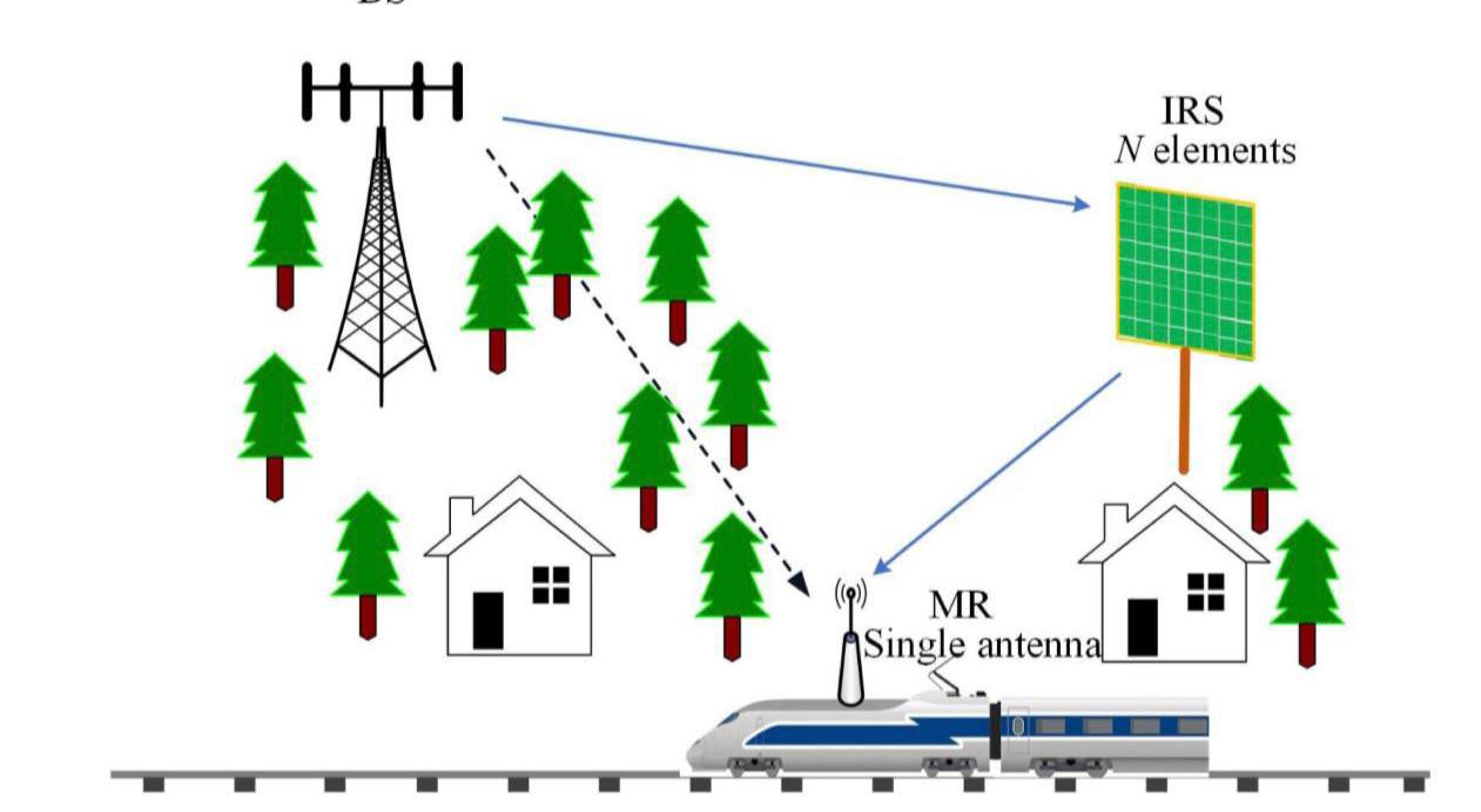
High-speed train (HST) networks experience severe communication reliability degradation due to extreme mobility, rapid time-varying channels, severe Doppler shifts, and frequent signal blockages caused by railway infrastructure. To overcome these critical propagation barriers, this graduation project investigates the utilization of Passive Intelligent Reflecting Surfaces (IRS) to dynamically reconfigure the wireless environment and enhance link reliability. A comprehensive multi-user wireless communication system is proposed, featuring a Base Station (BS) equipped with eight transmitting antennas (S = 8) serving two groups of users organized into distinct clusters, with each user utilizing eight receiving antennas (P = 8). To optimize spectral and energy efficiency, Non-Orthogonal Multiple Access (NOMA) is implemented with three users per sub-band using a 16-QAM digital modulation scheme. The wireless links involving the IRS are thoroughly modeled under a Rician channel distribution to evaluate both Line-of-S
الكلمات المفتاحية
IRS; NOMA; HST
Project Poster
Project students