Information and communications engineering

Smart Food Recognition and Nutrition estimation based on learning approaches.

Project academic year
Abstract
The proposed Smart Food Recognition and Nutrition Estimation System introduces an AI-driven approach for automated food analysis and nutritional assessment. A) Ingredient Segmentation: Rather than relying on image-level food classification, the system employs semantic segmentation to identify and separate multiple food ingredients within a single meal image at the pixel level. B) Multi-Scale Feature Extraction: An Encoder - Decoder architecture is enhanced with a deep backbone network and an Atrous Spatial Pyramid Pooling (ASPP) module to capture food ingredients of different sizes and spatial characteristics. C) Attention-Based Feature Enhancement: Squeeze-and-Excitation (SE) blocks and Global Pyramid Attention (GPA) modules are integrated to emphasize important features and improve segmentation quality. D) Automated Nutrition Estimation: After ingredient recognition, the detected classes are matched with nutritional records obtained from the USDA FoodData Central database to estimate calories, proteins, carbohydra
Keywords
Deep Learning

Enhancing Communication Reliability in High – Speed Train Networks Using Intelligent Reflecting Surfaces (IRS)

Project academic year
Abstract
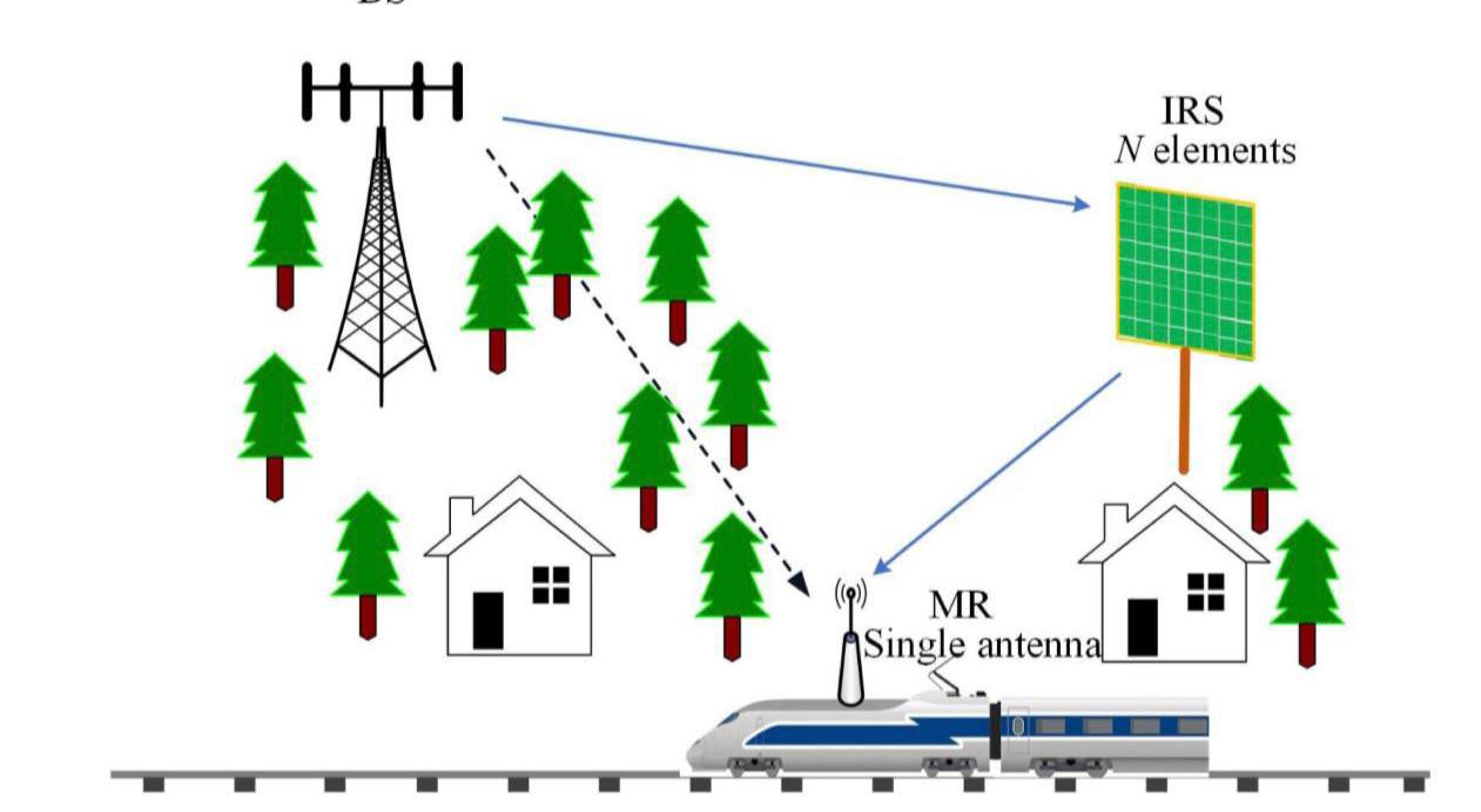
High-speed train (HST) networks experience severe communication reliability degradation due to extreme mobility, rapid time-varying channels, severe Doppler shifts, and frequent signal blockages caused by railway infrastructure. To overcome these critical propagation barriers, this graduation project investigates the utilization of Passive Intelligent Reflecting Surfaces (IRS) to dynamically reconfigure the wireless environment and enhance link reliability. A comprehensive multi-user wireless communication system is proposed, featuring a Base Station (BS) equipped with eight transmitting antennas (S = 8) serving two groups of users organized into distinct clusters, with each user utilizing eight receiving antennas (P = 8). To optimize spectral and energy efficiency, Non-Orthogonal Multiple Access (NOMA) is implemented with three users per sub-band using a 16-QAM digital modulation scheme. The wireless links involving the IRS are thoroughly modeled under a Rician channel distribution to evaluate both Line-of-S
Keywords
IRS; NOMA; HST
Project Poster
IRS wireless communication system